

Axis-module connection map
1394C-AM03 / 1394C-AM50 turn the common 1394 DC bus into model-specific servo motor current and close the assigned axis loop with motor feedback.
Welcome to Moore Automation Limited




|
Copy and share this link on social network or send it to your friends
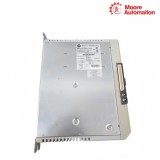
Copy| Product Name | Allen-Bradley 1394C-AM03 / 1394C-AM50 1394C servo amplifier axis modules |
| Item NO. | 2913274 |
| Weight | 0.1 kg = 0.2205 lb = 3.5274 oz |
| Category | AB |
| Brand | ALLEN-BRADLEY |
| Creation Time | 2026-10-08 |
Allen-Bradley 1394C-AM03 / 1394C-AM50 are Series C 1394 axis modules that receive the shared 530/680 V DC bus from a compatible 1394 system module and create controlled three-phase motor output for one axis. AM03 is the lower-current module; AM50 is the high-power module with fan-cooled hardware. Both modules use 5 kHz modulation and are specified at 98% efficiency.
The current envelope of 1394C-AM03 / 1394C-AM50 differs sharply. AM03 supplies 3.0 A rms continuously and 6.0 A peak for one second, while AM50 supplies 23.3 A continuously and 33.2 A peak. Their rated 360/460 V motor-output power is 1.6/2 kW and 11.34/15.6 kW, respectively. The AM50 current stage and capacitance are much larger than those of AM03.
Within a 1394 system, 1394C-AM03 / 1394C-AM50 keep DC-bus input, three-phase motor output, motor feedback, thermal/brake leads, and control data in separate paths. Module order, bus loading, motor compatibility, cable size, cooling, and configured current limits must follow the exact AM03 or AM50 hardware rather than the common Series C label. Feedback compatibility remains part of the motor-and-axis-module combination.
| Technical Item | 1394C-AM03 / 1394C-AM50 |
|---|---|
| Brand | Allen-Bradley |
| Product Type | Servo amplifier axis module |
| Brand Country | United States |
| Product Family | 1394 Series C |
| Nominal DC Input | 530/680 V DC |
| Catalog Power Class | 1394C-AM03: 2 kW; 1394C-AM50: 10 kW class |
| Continuous Current | 3.0 A rms / 23.3 A rms |
| Peak Current | 6.0 A rms / 33.2 A rms for 1 second |
| Continuous Power at 360/460 V | 1.6/2 kW / 11.34/15.6 kW |
| Efficiency | 98% |
| Modulation Frequency | 5 kHz ±10% |
| Speed Regulation | 0–0.05% of base speed with 100% torque disturbance |
| Static Gain | 1.28 / 22.8 rms A/mV |
| Peak Current Limit Adjust | 200% / 143% |
| Drift | 0.03 rpm/°C |
| Capacitance | 110 µF / 465 µF |
| Weight | 5 kg / 7 kg |
| Motor Output | Controlled three-phase output for one axis |

1394C-AM03 / 1394C-AM50 turn the common 1394 DC bus into model-specific servo motor current and close the assigned axis loop with motor feedback.
Each axis module switches the 530/680 V DC input into a controlled three-phase output for its connected motor.
Motor feedback is processed at the axis so the module can regulate velocity and current against the system command.
Motor thermal and brake-related leads are handled separately from the three-phase motor output and the DC-bus connection.
AM03 provides 3.0 A continuous and 6.0 A one-second peak current with a 200% peak-current-limit adjustment range.
AM50 provides 23.3 A continuous and 33.2 A one-second peak current with a 143% peak-current-limit adjustment range.
AM50 weighs about 7 kg and uses the high-power module cooling arrangement, while AM03 weighs about 5 kg and has a much smaller current stage.
Regarding 1394C-AM03 / 1394C-AM50, A replacement must be an approved motor/system combination with suitable bus capacity, cable size, module order, feedback, cooling, and configured current limits. A larger current stage can exceed the motor or wiring boundary if it is installed without a complete system check.
Keep the shared DC-bus input, controlled three-phase motor output, motor-feedback circuit, and motor thermal or brake leads on their assigned connections. The DC bus delivers energy to the module, while the feedback and thermal circuits return low-level sensing information and must not be treated as motor-power conductors. This distinction applies to 1394C-AM03 / 1394C-AM50.
Within 1394C-AM03 / 1394C-AM50, AM03 is rated 3.0 A continuous and 6.0 A peak for one second. AM50 is rated 23.3 A continuous and 33.2 A peak for one second, so its current and thermal boundary is substantially larger.
For 1394C-AM03 / 1394C-AM50, consider the following. Verify the exact motor/axis-module combination, feedback wiring and phasing, motor power phase order, configured motor data, and current-loop settings. A healthy DC bus alone does not confirm that the feedback and commutation paths are correct.
When 1394C-AM03 / 1394C-AM50 is involved, no. AM50 is the larger high-power module and its fan/cooling and placement requirements differ from AM03. Panel layout should use the exact module dimensions, weight, ventilation, and adjacency rules. Its added cooling hardware and fan service access must remain available after installation.
No. The DC bus supplies power energy. Feedback is a separate sensing circuit that returns motor position information to the control loop, and it must be shielded and routed independently from the bus and motor conductors. This guidance covers 1394C-AM03 / 1394C-AM50

Moore Automation organizes shipment handling around the confirmed order and destination, covering export packing, carrier coordination, dispatch communication and tracking updates.
Send the complete model, quantity and destination for a precise quotation.



Moore Automation Sales Team
Copyright © 2004–2026 www.mvme.cn. All rights reserved.
Disclaimer: Moore Automation Limited is an independent reseller and is not an authorized distributor or representative of the manufacturers featured on this website. Product names and trademarks belong to their respective owners.
No related record found