

HV150 output stage
HV150 supplies 34 A continuously and 68 A intermittently, producing 15 kW at 460 V input.
Welcome to Moore Automation Limited




|
Copy and share this link on social network or send it to your friends
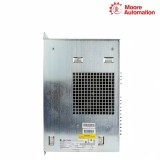
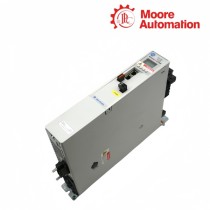
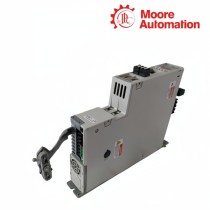
Copy| Product Name | Allen-Bradley 2098-DSD-HV150 / 2098-DSD-HV220 Ultra3000 460 V digital servo drives |
| Item NO. | 2913272 |
| Weight | 0.1 kg = 0.2205 lb = 3.5274 oz |
| Category | AB |
| Brand | ALLEN-BRADLEY |
| Creation Time | 2026-10-08 |
Allen-Bradley 2098-DSD-HV150 / 2098-DSD-HV220 are Ultra3000 high-voltage non-indexing digital servo drives with 230–480 V AC three-phase main and auxiliary input. At 460 V input, HV150 supplies 15 kW and HV220 supplies 22 kW continuous motor output. The HV prefix defines the voltage family, while the final 150 or 220 code fixes the actual power stage.
For 2098-DSD-HV150 / 2098-DSD-HV220, the main supply feeds an 800 V-class shunt bus and the inverter delivers controlled motor power, while feedback and control I/O remain on dedicated low-level interfaces. Auxiliary AC power supports the control section and is electrically distinct from the energy path that produces motor torque. Grounding and cable segregation are therefore part of the installed electrical boundary.
Power and regenerative limits separate 2098-DSD-HV150 / 2098-DSD-HV220 even though both carry the HV prefix. HV150 is rated 34 A continuous and 68 A intermittent with a 25 Ω internal shunt; HV220 increases those values to 47 A and 94 A and uses a 20 Ω shunt with higher continuous and peak power. That distinction affects the external shunt and enclosure design.
| Technical Item | 2098-DSD-HV150 / 2098-DSD-HV220 |
|---|---|
| Brand | Allen-Bradley |
| Product Type | High-voltage non-indexing digital servo drive |
| Brand Country | United States |
| Product Family | Ultra3000 HV |
| AC Input Voltage | 230–480 V rms, three-phase |
| AC Input Frequency | 47–63 Hz |
| Continuous Power at 460 V | 2098-DSD-HV150: 15 kW; 2098-DSD-HV220: 22 kW |
| Main Input Current at 460 V | 20 A rms / 28 A rms |
| Continuous Output Current | 34 A 0-peak / 47 A 0-peak |
| Intermittent Output Current | 68 A 0-peak / 94 A 0-peak |
| Bus Capacitance | 940 µF / 1880 µF |
| Internal Shunt Resistance | 25 Ω / 20 Ω |
| Shunt Switching | On at 800 V DC; off at 750 V DC |
| Bus Overvoltage | 810 V DC |
| Internal Shunt Power | HV150: 200 W/25.6 kW; HV220: 400 W/32 kW continuous/peak |
| Energy Absorption at 460 V | 109 J / 219 J |
| Contactor-Cycle Limit | Three cycles per minute |
| Commissioning Software Family | Ultraware |
HV150 supplies 34 A continuously and 68 A intermittently, producing 15 kW at 460 V input.
HV220 supplies 47 A continuously and 94 A intermittently, producing 22 kW at 460 V input.
The bus capacitance increases from 940 µF to 1880 µF, and the 460 V energy-absorption value increases from 109 J to 219 J.

The installation boundary for 2098-DSD-HV150 / 2098-DSD-HV220 includes three-phase supply protection, controlled power cycling, shunt selection, grounding, and separation of high-voltage and signal wiring.
The HV drives are limited to three contactor cycles per minute because repeated inrush events can damage the current-limiting circuitry.
HV150 uses 25 Ω and HV220 uses 20 Ω; an external shunt must follow the approved resistance and power boundary for the exact drive.
Motor feedback and control I/O should be routed away from main input, DC-bus, shunt, and motor-output conductors.
On 2098-DSD-HV150 / 2098-DSD-HV220, HV identifies the 230–480 V three-phase family, but HV150 and HV220 have different output current, bus capacitance, shunt resistance, energy absorption, size, and power. The complete suffix must remain visible on the RFQ and software record.
Not automatically. HV150 is based on a 25 Ω internal shunt and HV220 on 20 Ω, with different continuous and peak capability. Any external shunt must be selected from the approved combination for the exact drive and load cycle. The stated boundary applies to 2098-DSD-HV150 / 2098-DSD-HV220.
With 2098-DSD-HV150 / 2098-DSD-HV220 under review, the inrush-current limiting circuit is rated for no more than three contactor cycles per minute on this HV family. Faster repetitive cycling can overheat or damage that circuitry even if the drive does not immediately report a fault.
The auxiliary/control section and the main power stage are separate. Control electronics can communicate or show status while the DC bus and inverter are not enabled to supply motor energy. This requirement covers 2098-DSD-HV150 / 2098-DSD-HV220.
For equipment identified as 2098-DSD-HV150 / 2098-DSD-HV220, check motor voltage, continuous and peak current, feedback type, cable, brake, configured motor data, and load profile. A larger drive does not remove the need for an approved motor-drive combination and correctly set current limits.
Keep feedback and other low-level signals physically separated from main AC, DC bus, shunt, and motor-output conductors, using the specified shield termination and bonding arrangement. This reduces coupling into the servo feedback path. The models covered are 2098-DSD-HV150 / 2098-DSD-HV220.

Moore Automation handles multi-brand requirements spanning programmable control, servo motion, distributed control, safety systems and condition-monitoring components.
Send the complete model, quantity and destination for a precise quotation.

Moore Automation Sales Team
Copyright © 2004–2026 www.mvme.cn. All rights reserved.
Disclaimer: Moore Automation Limited is an independent reseller and is not an authorized distributor or representative of the manufacturers featured on this website. Product names and trademarks belong to their respective owners.
No related record found