




GE Fanuc IC655MDL511 / IC655MDL512 Series Five AC/DC Input Module
Positive-logic Series Five inputs with different voltage ranges, point counts and isolation structure.
Function, System Position and Selection Boundary
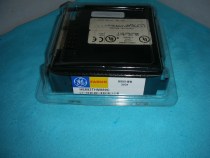
Both modules accept positive-logic field inputs and support AC or DC sources, but they serve different circuits. IC655MDL511 is a 16-point isolated 24–48 VAC/DC module; IC655MDL512 is a 32-point 12–24 VAC/DC module.
The isolated 511 places greater emphasis on circuit separation, while the 512 provides higher point density in four groups of eight. Status LEDs also support starting-address display when commanded by the Series Five tools.
Technical Specifications
Shared functions
Exact differences
Isolation or Density
The catalog choice follows the field-circuit architecture. Use IC655MDL511 where isolated 24–48 V circuits are required; use IC655MDL512 where 32 grouped 12–24 V inputs match the design.
Voltage window
Do not place 48 V circuits on the 12–24 V model.
Commons
Preserve isolated or grouped returns exactly.
Address space
Reserve 16 or 32 consecutive input references.
Installation and Acceptance Sequence
- Document every field voltage and common before disconnecting.
- Confirm whether isolation is an application requirement.
- Preserve the configured starting address and terminal keying.
- Prove points under both expected signal state and field-supply conditions.
FAQ
What is shared by IC655MDL511 / IC655MDL512?
Both are Series Five positive-logic AC/DC input modules with removable field terminals and status LEDs.
Which of IC655MDL511 / IC655MDL512 provides isolated inputs?
IC655MDL511 provides 16 isolated 24–48 VAC/DC inputs.
Which of IC655MDL511 / IC655MDL512 has the higher point density?
IC655MDL512 provides 32 inputs arranged in four groups of eight.
Can IC655MDL511 / IC655MDL512 be exchanged without checking voltage?
No. Their 24–48 V and 12–24 V operating ranges are materially different.
What configuration should be retained for IC655MDL511 / IC655MDL512?
Retain the starting I/O reference, point order, field commons and any terminal-block keying.
English-Language Sales Communication
English communication allows overseas buyers to discuss product identity and order details directly with the sales team.


No related record found