

What should technicians avoid overlooking on 6GT2801-3BA10 when they set up the RS422/RS232 host link?
On 6GT2801-3BA10, match the RS422 or RS232 wiring and 3964R communication parameters at both ends before diagnosing higher-level RFID commands.
Welcome to Moore Automation Limited



|
Copy and share this link on social network or send it to your friends
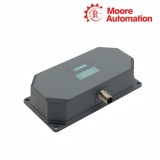
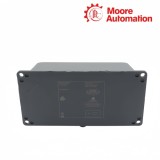
Copy| Product Name | Siemens 6GT2801-3BA10 RF380R Industrial RFID Reader |
| Item NO. | 2945431 |
| Weight | 0.1 kg = 0.2205 lb = 3.5274 oz |
| Category | SIEMENS |
| Brand | SIEMENS |
| Creation Time | 2026-11-26 |
13.56 MHz industrial identification
An integrated antenna allows 6GT2801-3BA10 to identify RF300, ISO 15693 and MOBY E transponders at 13.56 MHz. The IP67 enclosure suits production locations exposed to dust, moisture and mechanical contact.
Host communication from 6GT2801-3BA10 uses an RS422/RS232 interface with the 3964R procedure. Usable range inside the transmission window depends on the selected transponder and nearby metal.
Flush mounting in metal is mechanically possible for 6GT2801-3BA10, although the surrounding material reduces field performance. Reader spacing, tag alignment and radio mode therefore shape reliable data exchange.
6GT2801-3BA10 begins with field coupling at the integrated antenna and ends with a verified identifier or memory operation on the host link. Radio activity and serial communication can be observed as successive stages rather than one opaque transaction.
The integrated antenna energizes a compatible transponder inside the transmission window.
The reader resolves the identifier and memory operation before sending the result over the serial host interface.
Status LEDs separate radio activity and device state from higher-level controller diagnostics.
6GT2801-3BA10 defines a usable identification window through reader placement, tag orientation and surrounding metal. Mechanical mounting and RF behavior must be considered together because either can limit the available reading margin.
The transmission window is rectangular rather than perfectly square, so transponder travel direction affects available dwell time.
Metal near the reader changes operating distance even when flush mounting is mechanically permitted.
Reader-to-reader spacing limits mutual influence when several identification points share one conveyor or fixture.
On 6GT2801-3BA10, match the RS422 or RS232 wiring and 3964R communication parameters at both ends before diagnosing higher-level RFID commands.
The practical check for 6GT2801-3BA10 is to repeat the read test after removing nearby metal or increasing spacing because flush mounting can reduce the usable RF field.
When working with 6GT2801-3BA10, technicians should reduce line speed or requested data length during diagnosis to determine whether intermittent reads are caused by insufficient dwell time.
Begin the 6GT2801-3BA10 review with this sequence: Move the tag through the documented rectangular transmission window and maintain enough dwell time for the requested read or write operation.
With 6GT2801-3BA10 in service, maintain the stated reader separation and test one reader at a time when adjacent identification points influence one another.
6GT2801-3BA10: Use an RF300, ISO 15693 or MOBY E transponder supported by the configured mode and verify memory access with one stationary tag first.
Moore Automation coordinates packing, carrier selection and shipment tracking for international destinations.
The destination and contact record stay connected to the model list from packing through delivery follow-up.


Moore Automation Sales Team
Copyright © 2004–2026 www.mvme.cn. All rights reserved.
Disclaimer: Moore Automation Limited is an independent reseller and is not an authorized distributor or representative of the manufacturers featured on this website. Product names and trademarks belong to their respective owners.
No related record found