Two ACS550-01 current classes with different frame and duty ratings
01
Product Description
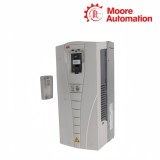
ABB ACS550-01-096A-4 is a wall-mounted ACS550 drive for a three-phase 380–480 V supply class. ABB ratings place the drive at 96 A and 45 kW for normal use, with a 77 A and 37 kW heavy-duty rating in frame R5.
ABB ACS550-01-124A-4 is the next documented current class in this comparison. Its normal-use rating is 124 A and 55 kW, while its heavy-duty rating is 96 A and 45 kW in frame R6.
ABB ACS550-01-096A-4 / ACS550-01-124A-4 share the ACS550 control platform and voltage class, but the rating table assigns different frame sizes, continuous currents and motor powers. Those published duty columns must remain attached to the exact type code.
02
Product Specifications
Specification
ACS550-01-096A-4
ACS550-01-124A-4
Brand
ABB
ABB
Drive family
ACS550-01
ACS550-01
Supply
Three-phase 380–480 V
Three-phase 380–480 V
Mounting form
Wall-mounted drive
Wall-mounted drive
Normal-use current
96 A
124 A
Normal-use motor power
45 kW / 75 hp
55 kW / 100 hp
Heavy-duty current
77 A
96 A
Heavy-duty motor power
37 kW / 60 hp
45 kW / 75 hp
Frame size
R5
R6
Control platform
ACS550 standard control
ACS550 standard control
Rating boundary
Use exact 096A-4 row
Use exact 124A-4 row
Mechanical boundary
R5 cabinet envelope
R6 cabinet envelope
Selection evidence
Nameplate, voltage, duty and option codes
Nameplate, voltage, duty and option codes
03
Operating Characteristics
The two ACS550 drives operate within the same 380–480 V family but support different load levels, thermal demands and motor-power ranges; duty selection determines how much continuous and overload capability is available.
Choose the duty column from the application
ABB ACS550-01-096A-4 / ACS550-01-124A-4 can be applied under normal-use or heavy-duty conditions. The heavy-duty column reflects a lower continuous current and motor power so the drive retains overload margin for demanding loads.
Account for heat and airflow at the selected load
Losses and cooling demand rise with output and frame size. The R5 and R6 enclosures therefore need their documented airflow path and clearances maintained instead of being treated as electrically identical boxes.
Preserve motor and application parameters
Acceleration, deceleration, current limits and motor data shape how each drive responds to the connected process. A saved parameter set belongs to the configured application and should be reviewed before it is transferred.
04
Installation Highlights
Installation combines the correct mains class with frame-specific mounting, cooling, cable routing and control wiring so the selected ACS550 can deliver its documented duty in the cabinet.
FRAME
Plan the R5 and R6 mechanical envelopes separately
ABB ACS550-01-096A-4 uses the R5 frame and ABB ACS550-01-124A-4 uses R6. Mounting holes, cabinet space, terminal access and lifting/handling arrangements must follow the actual frame.
POWER PATH
Separate mains, motor and control wiring
Use the documented terminal arrangement and site protection rules for the 380–480 V supply. Motor and input power conductors should be routed away from low-level control wiring in line with the ACS550 installation guidance.
COOLING
Keep the airflow path unobstructed
Cabinet design must allow the frame-specific cooling air to enter and leave the drive without recirculating hot air. Clearances and ambient conditions are therefore part of installation, not optional finishing details.
05
Common Questions
Which duty should be quoted for ABB ACS550-01-096A-4 / ACS550-01-124A-4?
For ABB ACS550-01-096A-4 / ACS550-01-124A-4, provide the motor power, steady load, overload demand and operating cycle. The normal-use and heavy-duty columns are application choices, not interchangeable labels for the same output.
What if the existing cabinet was built for R5 but ABB ACS550-01-096A-4 / ACS550-01-124A-4 includes an R6 replacement?
For ABB ACS550-01-096A-4 / ACS550-01-124A-4, do not assume the R6 unit will fit an R5 envelope. Compare dimensions, mounting, terminal access, airflow and cable bend space before changing the cabinet.
Can parameters be copied directly between ABB ACS550-01-096A-4 / ACS550-01-124A-4?
For ABB ACS550-01-096A-4 / ACS550-01-124A-4, retain the backup but review motor nameplate data, current limits, application macros, I/O assignments and option-dependent settings before loading parameters into a different current and frame size.
What causes overheating after installing ABB ACS550-01-096A-4 / ACS550-01-124A-4?
For ABB ACS550-01-096A-4 / ACS550-01-124A-4, check cabinet ambient temperature, blocked airflow, frame clearances, fan condition and actual load against the selected duty. A correct type code alone does not guarantee adequate cabinet cooling.
Which nameplate details should be photographed for ABB ACS550-01-096A-4 / ACS550-01-124A-4?
For ABB ACS550-01-096A-4 / ACS550-01-124A-4, photograph the full type code, voltage class, current/frame data, option markings and serial/nameplate area, then attach the motor nameplate and cabinet overview.
How should commissioning records differ for ABB ACS550-01-096A-4 / ACS550-01-124A-4?
Commissioning ABB ACS550-01-096A-4 / ACS550-01-124A-4 should record the actual drive article, motor data, duty basis, protection settings, rotation check, control I/O and saved parameters for the installed unit—not a generic ACS550 checklist only.
Moore Automation combines multi-brand coverage with model-focused enquiry handling for PLC, DCS, drive, robotics, safety and monitoring components. The company can support both current production and difficult-to-source legacy requirements.
Commercial coordination emphasizes clear manufacturer and model records, responsive quotation communication, protective packing information and traceable shipment updates.
Disclaimer: Moore Automation Limited is an independent reseller and is not an authorized distributor or representative of the manufacturers featured on this website. Product names and trademarks belong to their respective owners.





No related record found