

Output image
The CPU transfers sixteen commanded output bits to the module each scan.
Welcome to Moore Automation Limited


|
Copy and share this link on social network or send it to your friends
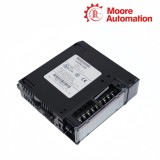
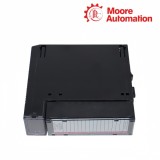
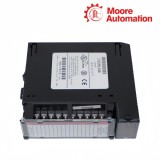
Copy| Product Name | GE Fanuc IC693MDL940J 16-Point Relay Output Module |
| Item NO. | 2945591 |
| Weight | 0.1 kg = 0.2205 lb = 3.5274 oz |
| Category | GE |
| Brand | GE |
| Creation Time | 2026-11-27 |
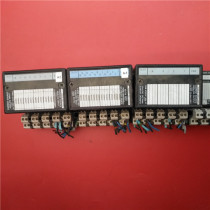
GE Fanuc IC693MDL940J is a sixteen-point, normally-open relay output module for Series 90-30 and supported PACSystems installations. It receives sixteen output bits from the controller and uses them to operate sixteen electromechanical contacts for isolated field-load switching.
The outputs of IC693MDL940J are arranged as four groups of four. Each group uses its own common terminal, so field loads within a group share the same source boundary while the four groups can remain electrically separate from one another.
Terminal wiring for IC693MDL940J places the four group commons beside their associated relay outputs. The module supplies contact operation, not field load power; the external source and load circuit determine the voltage, current and protection applied to each contact group.
Controller bits operate individual contacts, but the field source is organized around four shared commons.
The CPU transfers sixteen commanded output bits to the module each scan.
Module electronics energize the relay coil assigned to each commanded point.
The normally-open contact closes and completes the external load circuit.
Four contacts share one common terminal, creating four separate source groups across the module.
The command path ends at the relay coil, while the load path begins at the group common and passes through the contact. This is why an illuminated output indication can coexist with a stopped load when the external source or return path is open.
The module separates control logic from field power, so wiring and load ratings remain external design responsibilities.
The external field source must match the load and the published relay-contact limits.
Separate commons allow different circuits between groups, but not between points that share one common.
Inductive or high-inrush loads require the suppression and protection specified for the field device.
Wire size, copper rating and screw torque apply to the removable terminal block rather than the relay logic.
A field circuit must satisfy both the shared-common arrangement and the switching behavior of its load. Separating those boundaries helps locate whether a failure belongs to the terminal group, the relay contact or the external suppression and protection components.
The four points share a common terminal. Check the corresponding group source, fuse, common conductor and terminal before troubleshooting four separate relay coils.
Apply suppression appropriate to the AC or DC load at the field device and keep the contact current within the published switching limits.
Different groups can use separate field sources when every group remains within the module ratings. Points inside one four-output group share the same common boundary.
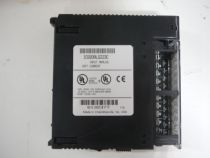
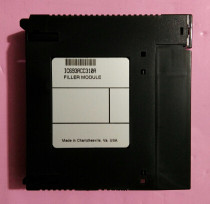
Photograph the J revision label and terminal block, mark all four commons and sixteen output conductors, and retain the rack-slot and output-reference map.
The indication follows the module command path. Measure the group source, contact output and load return to find an open field circuit or missing load power.
Confirm 90 °C copper conductors, permitted conductor count and size, correct group commons, and 1.1–1.3 N·m screw torque before energizing loads.
Moore Automation can retain terminal photographs, revision labels and output-group details with the exact relay-module enquiry.
Requested documentation, commercial information and shipment communication remain under one named contact.
Moore Automation Sales Team
Copyright © 2004–2026 www.mvme.cn. All rights reserved.
Disclaimer: Moore Automation Limited is an independent reseller and is not an authorized distributor or representative of the manufacturers featured on this website. Product names and trademarks belong to their respective owners.
No related record found